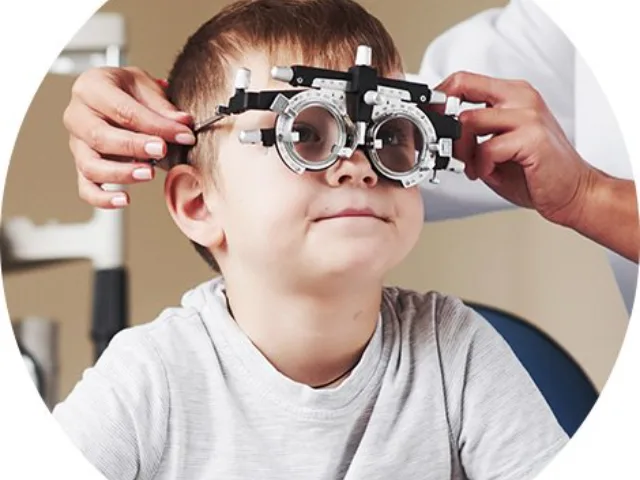
Why children need eye checks
Children rarely complain about poor vision; they think everyone sees the way they do. Many eye problems, like lazy eye, are best treated early in childhood, when the visual system is still developing.
Signs to watch for
- Sitting very close to the TV or holding books close
- Squinting, frequent rubbing or blinking
- Head tilt or turning the face to see
- An eye that turns in, out, up or down
- A white reflex in the pupil in photos
- Headaches or falling behind in school
Common conditions
- Short-sight, long-sight and astigmatism needing glasses
- Lazy eye (amblyopia)
- Squint (strabismus)
- Congenital cataract and other eye conditions present at birth
- Eye infections and allergies
When to check
A first eye check is recommended in infancy, again before starting school, and then regularly through the school years, or any time you notice a problem.
Treatment
Treatment may include glasses, patching therapy for lazy eye, medicines, and surgery for squint or congenital cataract when needed. We make the visit friendly and comfortable for children.
Frequently asked questions
At what age should my child have the first eye test?
Babies can be examined from infancy. A full eye check before starting school is strongly recommended, or earlier if you notice any problem.
Does screen time damage children's eyes?
Long screen time can cause eye strain and is linked with increasing short-sight. Encourage breaks and outdoor play every day.
Will my child need glasses forever?
It depends on the condition. Some children need glasses only for a few years; others need them longer. Regular reviews guide this.
This page is for general information and does not replace a consultation. Please visit us for advice about your own eyes.